Ascent Passport
- Ascent class — technical
- Ascent region — Tian Shan, Kyrgyz Ala-Too ridge
- Pik Svobodnoy Korei, 4740 m, via the Center of the North Face
- Difficulty category — 6A
- Height difference — 740 m, length — 890 m, length of sections with 5th diff. cat. — 490 m, 6th diff. cat. — 330 m. Average steepness of the main part — 71°
- Pitons hammered:
- rock — 35/20
- bolt — 18/13
- chocks — 57/28
- ice — 63/0 (x — reuse of previously driven pitons)
- Team's travel time — 35 hours and 4 days
- Overnights: 3 lying on a platform
- Leader — Volodin Viktor Gennadievich — Master of Sports of the USSR
Participants:
- Bondarenko Sergey Vasilievich — Master of Sports of the USSR, International Class
- Abramov Alexander Viktorovich — Candidate Master of Sports
- Smirnov Dmitry Sergeevich — Candidate Master of Sports
- Coach — Demchenko Alexander Stepanovich — Master of Sports of the USSR, International Class
- Departure to the route: February 20, 1991 Summit: February 23, 1991 Return: February 24, 1991
- Organization: 13th Sports Club of the Army of the Order of Lenin Moscow Military District
Team's Tactical Actions
To determine the state of the route and the possibility of climbing the rocks in winter conditions, two main ascents were made:
- to Pik Svobodnoy Korei via Barber's route;
- to the 5th tower of Korona via a pure rock route of 5B diff. cat.
During these training ascents, the Popenko route planned as part of the USSR Championship was reviewed.
The ascents made as part of the training camp allowed the team to develop a tactic for climbing using a platform, which provided a full-fledged rest on the route. The platform was installed in safe places, protected from falling ice and rocks:
- by rock outcrops;
- by a cornice.
On the first day, the lower third of the route was climbed, the most dangerous but less difficult. A bivouac was organized at the beginning of the rock section of the wall, from which the wall section under the cornice was processed. After processing, the bivouac was moved to a new safe location under the cornice.
The lower ice section of the wall was climbed using ice axes and "ice picks." The rock sections, due to the ice coating, were climbed by the first climber wearing crampons, also using ice tools. The cornice was traversed using a ladder on bolt pitons with the use of chock stones. To facilitate the work, the first climber on difficult sections went without a backpack.
Stations were organized in safe places on belayed pitons and chock stones. The first climber went on a single UIAA rope. The rest climbed on fixed ropes with top-rope belay using two ascenders.
The rope teams worked in the following composition: Volodin—Abramov, Bondarenko—Smirnov. The leading rope team did not change during the day.
- February 20, 1991 and February 22, 1991 — Volodin—Abramov team worked
- February 21, 1991 and February 23, 1991 — Bondarenko—Smirnov team worked
Each participant had sufficient technical preparation to work as the first climber on the route.
Communication was carried out via a "Lastochka" radio station with observers located at Korona bivouacs, 4 times a day.
On the route, 2 hot meals were organized, and during the day, a pocket snack.
The conditions for the successful completion of the route were:
- high physical, technical, and psychological preparation;
- грамотные тактические действия команды;
- material support of the team.
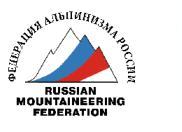
1–3. Bergschrund. Steep hard ice.
3–4. Ice groove in rocks.
4–6. Difficult rocks with thin ice coating.
6–7. Difficult rock wall. Passage using ITO.
7–10. Ice groove, ridge, and rock chimney filled with ice.
10–11. Difficult rock slab.
11–12. Series of ledges and small walls.
12–13. Very difficult wall with a crack. Climbed using stemming.
13–14. Chimney with a plug. Climbed using ITO.
14–17. Ice groove interrupted by steep steps, passable only with ITO. Inner corner leads to a 0.5 × 1.5 m ledge. First and second overnight stays.
17–19. Difficult wall leads to a sloping ledge. Along the ledge to the right, then left upwards under the cornice. Third overnight stay.
19–22. Very difficult climbing on a bolted route through a series of cornices, using own pitons and chock stones. Control traverse. Exit to the "roof."
22–31. Via steep ice grooves, crossing a series of ridges and small walls, exit to the crest. Very hard (bottle-like) ice.
31–32. Simultaneous ascent to the summit along the crest.