
Ascent Logbook
3 years old 44 (Team leader Babitskiy)
- Category of technical ascents.
- 2.10 Mountains of Dagestan.
- Erydag 3925 m, via the left part of the NW wall, "Serp" route.
- 6A category of difficulty.
- Route characteristics: height difference – 1025 m, wall section height difference – 950 m, route length – 2030 m, wall section length – 1230 m, section lengths: 5 – 635 m, 6 – 45 m, average steepness of the wall section – 70 degrees.
- Equipment used on the route:
- rock pitons 133/21
- chockstones 85/12
- bolt pitons 2/2+1*
- of which previously left rock pitons 4 (3 were extracted)
- bolt pitons 7. No personal gear was left behind.
- Climbing hours – 28 h and preliminary processing – 12 h, total 40 h.
- Overnights: first and second in the assault camp after preliminary processing; third — one in a hammock, three — sitting; fourth — semi-reclined; fifth — one in a hammock, the rest — sitting; sixth — semi-reclined.
- Leader: Goryaev Anatoliy Erdnigorayevich — CMS
Team members:
- Sogokon Vladimir Aleksandrovich — CMS
- Slobodenyuk Yuriy Yuryevich — CMS
- Voronin Sergey Valeryevich — 1st sports category
- Bublik Oleg Nikolayevich — 1st sports category
- Coach: Murtazaliyev Ziyavudin Murtazaliyevich
- Approach to the route Preliminary processing: October 2, 1999 – October 3, 1999. Summit: October 8, 1999. Return to the assault camp: October 8, 1999.
- Organization: Dagestan Republican Search and Rescue Service, EMERCOM of Russia.
1999, Makhachkala
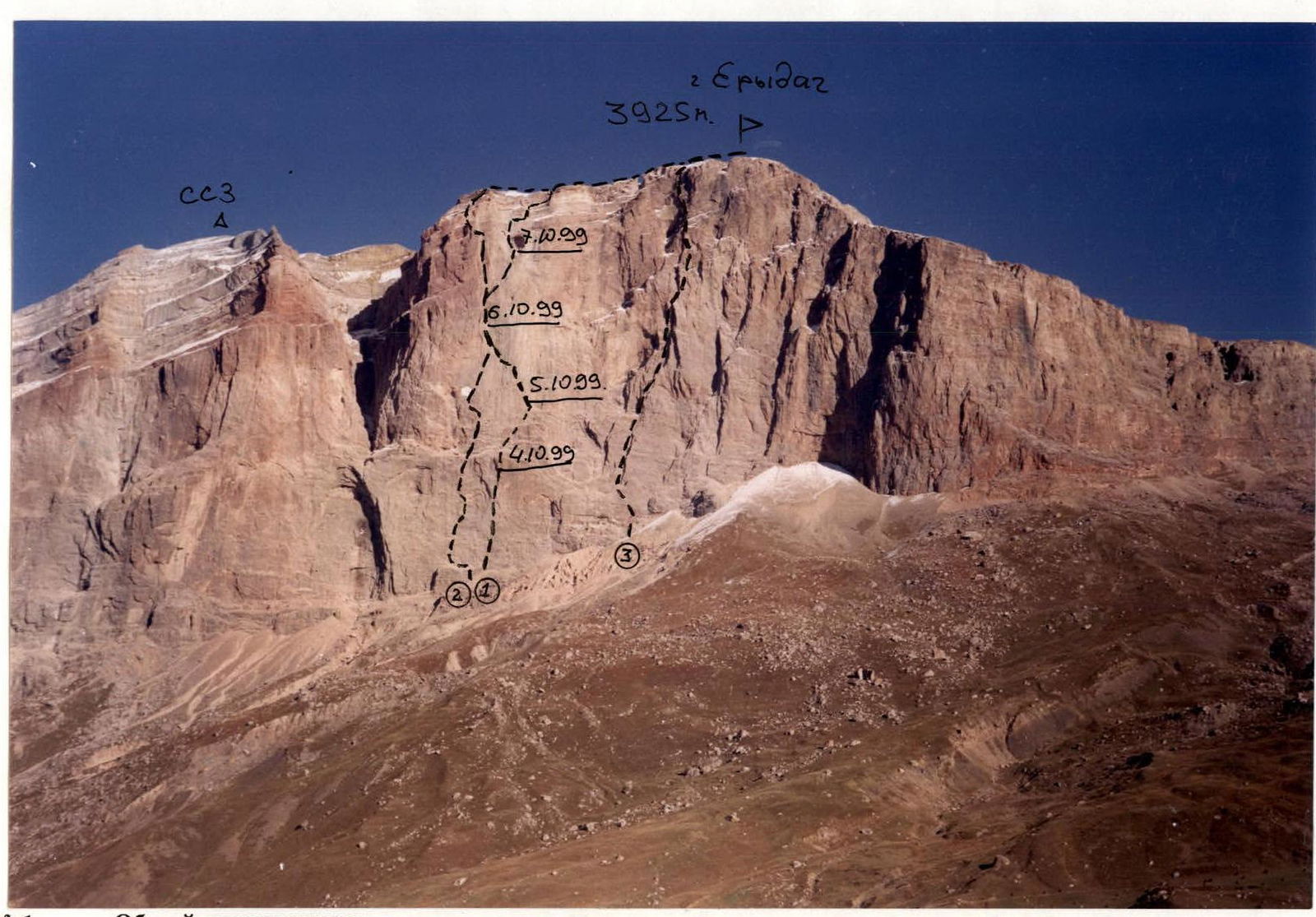
Photo #1. General view of the summit
- Erydag via the left part of the NW wall, "Serp" route 6A, Babitskiy 81
- Erydag via the left part of the NW wall, "Zerkalo" route 6A, Efimov 81
- Erydag via the center of the NW wall 5B, Belousov 86
17:00 "Smena 8 m" (f=28 mm)
Technical and Tactical Actions of the Team
On October 2, 1999, the group departed in full strength at 10:30 from the assault camp to the base of the route. At 12:00, the Voronin–Slobodenyuk pair began work. The others returned to the assault camp. Voronin worked first, with Slobodenyuk providing belay. They processed 4 ropes, then descended to the assault camp. It was decided to process for another day to avoid an extra night on the bastion.
The next day:
- At 9:00, the Goryaev–Sogokon pair began processing.
- At 11:30, they started ascending via the processed ropes.
- From 13:00 to 17:30, the pair processed another two ropes, then descended to the assault camp.
- Goryaev worked first.
On October 4, 1999, the group departed in full strength and with full gear at 9:00 from the assault camp. At 11:30, they began moving along the fixed ropes. By the end of the day, Voronin and Bublik processed another two ropes. Voronin worked first. They reached the "roof" of the bastion. They organized an overnight stay 40 m below on a small ledge. For ease of passage, the last rope was rerouted from under the cornice to the left onto the wall. A control cairn was set up at the overnight location.
On October 5, 1999, the Sogokon–Slobodenyuk pair worked. Sogokon worked first. The pair worked together on the system of walls and ledges after the bastion. Then they dropped 80 m of rope (Photo #10), organized an overnight stay in a niche under the "handle of the sickle," from where they processed another two ropes of the "handle." It snowed lightly at night.
On October 6, 1999, they ascended the processed ropes, traversed, and climbed three ropes of the "sickle," overnighting while sitting on a ledge. One person was in a hammock. Voronin worked first in a pair with Goryaev. After lunch, the weather began to deteriorate, with occasional snow.
On October 7, 1999, Sogokon worked first, with Voronin providing belay. After exiting the inner corner to the right, belaying became more challenging: the cracks were "blind," and the rock became unreliable, like clay, with pitons hardly holding. They overnighted in a hollow. A control cairn was set up. Not a single control cairn was found after the bastion. They also placed a cairn on a ledge before the "sickle." From the hollow, they processed one rope. The overnight stay was semi-reclined, with a platform assembled in 1 h 30 min.
On October 8, 1999, Voronin worked first, with Sogokon providing belay. The terrain was rugged. Blocks were loose. They had to work very cautiously. At 16:30, the first climber reached the plateau. They gathered their gear and ascended to the summit at 18:00 via a gentle slope (snow, mud). They descended to the camp at 22:00.
The rope-team work system was refined from previous ascents. The first climber worked on a rope meeting UIAA requirements and carried a fixed rope. All movements along fixed ropes were organized with top-rope belay. All overnights were planned. They brought 28 l of water, and melted an additional 12 l from snow on the fourth and sixth nights.
There were no falls or injuries on the route. They climbed with a reserve of strength, fuel, and food for any weather whims and other unforeseen circumstances.
An observer was stationed below the wall, with both radio and voice communication. The observer had contact with the border guard unit, who in turn were in contact with the search and rescue service in Makhachkala.
Route Description
The route begins from the right part of a ledge at the base of the bastion on the left part of the NW wall. It proceeds right, up a wall with small inner corners, increasing in steepness and difficulty, to a 2 m wide ledge (R2–R3). From the ledge, it goes up a wall with very poor relief, smooth holds, and almost no cracks, to under a cornice. On the section R4–R5, "sky hooks" were actively used. Further, there's a large flake, an inner corner with an overhanging right side and a smooth left side. Following the inner corner to the left wall (R6–R7), one reaches a ledge — the last 10 m have unreliable rock. This is the first overnight location. To the right, on a piton, there's a control cairn.
Further, right through a cornice, a wall, an overhanging inner corner, and another wall leads to the "Roof" of the bastion. To avoid large pendulum swings, the fixed rope was rerouted around the corner. Then, through a system of walls and diagonal ledges (R9–R11), one moves towards a niche under the "handle of the sickle." The section is easily cleared by throwing stones even in the morning. There's not a single safe spot. The second overnight stay is in this niche (October 5, 1999). After a strong September cyclone, there was still snow. Further, up and slightly left, through a small overhang via inner corners (R11–R13).
Climbing is complex, with initial use of artificial aids (IT). Then the corners become less steep, transitioning left into a traverse that meets steep inner corners with water-smoothed walls (R15–R17). Then there's a 1 m wide chimney (R17–R18) that is capped. The chimney is climbed free, with hexes and friends used on the cornice. The section ends with a complex inner corner. The overnight stay is on a small ledge, with one person in a hammock and the rest sitting. Further, up the inner corner with an overhang in its second part (R18–R19). The holds are good.
Then, right-up along the wall towards a large hollow (R19–R20). Climbing becomes more complicated due to unreliable belays; pitons and chockstones are difficult to place. The inner corner (R20–R21) is composed of very loose material, making belaying extremely challenging. The corner leads to a ledge, from which a wall of unreliable rock also leads to a hollow. The overnight stay is here. Snow is found in the hollow.
Further, along the left wall (R23–R24) into an inner corner composed of blocks. There's a risk of blocks detaching when hammering in pitons. The wall (R24–R25) is composed of even smaller and looser blocks. Then, a traverse along a ledge to the right, under the base of another wall of unreliable rock, representing small inner corners with small scree ledges (R26–R27). This leads to a large scree ledge, where it's very difficult to establish a reliable belay! Then, a 60 m traverse to the right. An inner corner with straightforward climbing leads to a plateau. From there, right along a gentle scree slope to the summit.
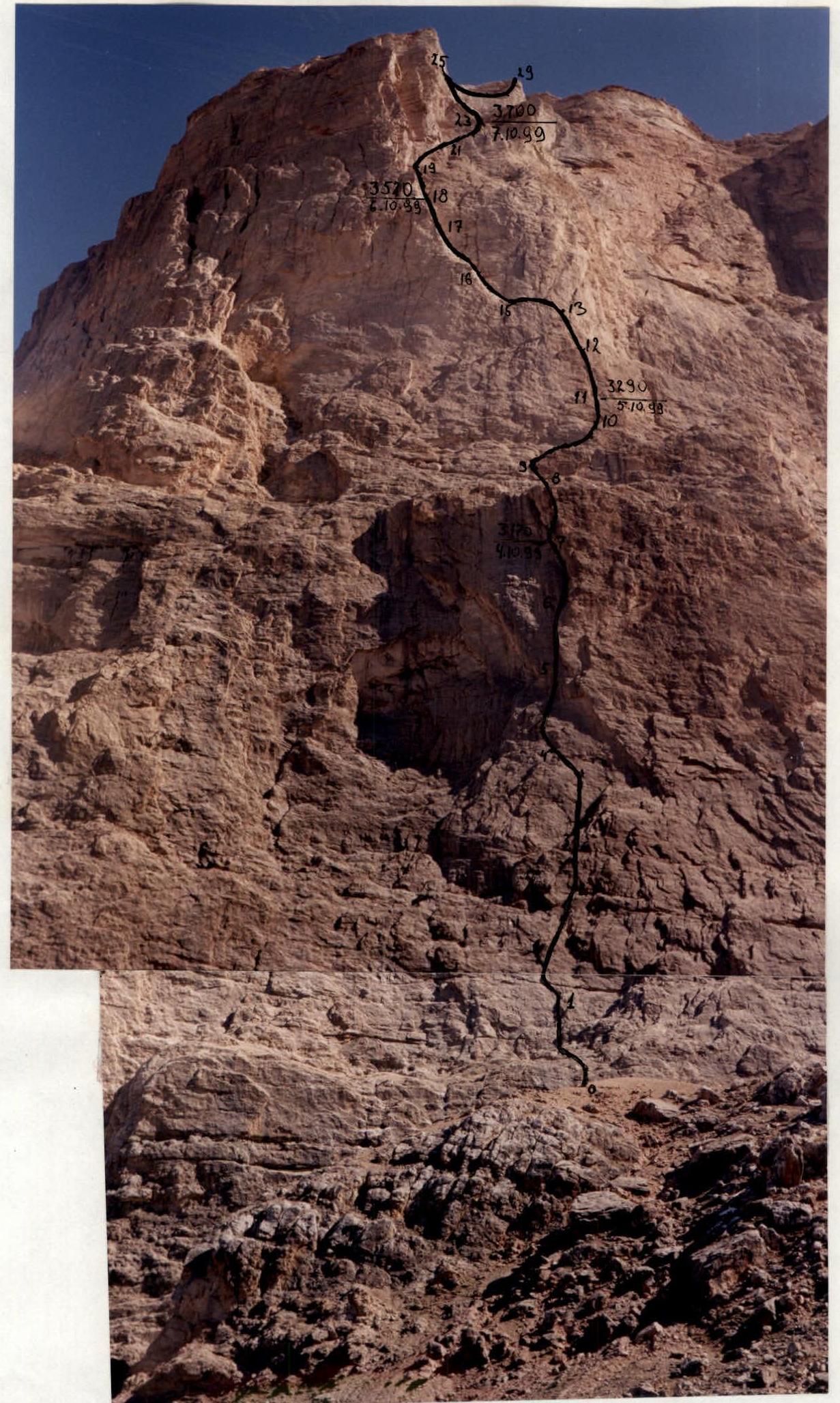
Photo #4. Technical photo of the route. October 3, 1999, 13:00. Smena 8 m
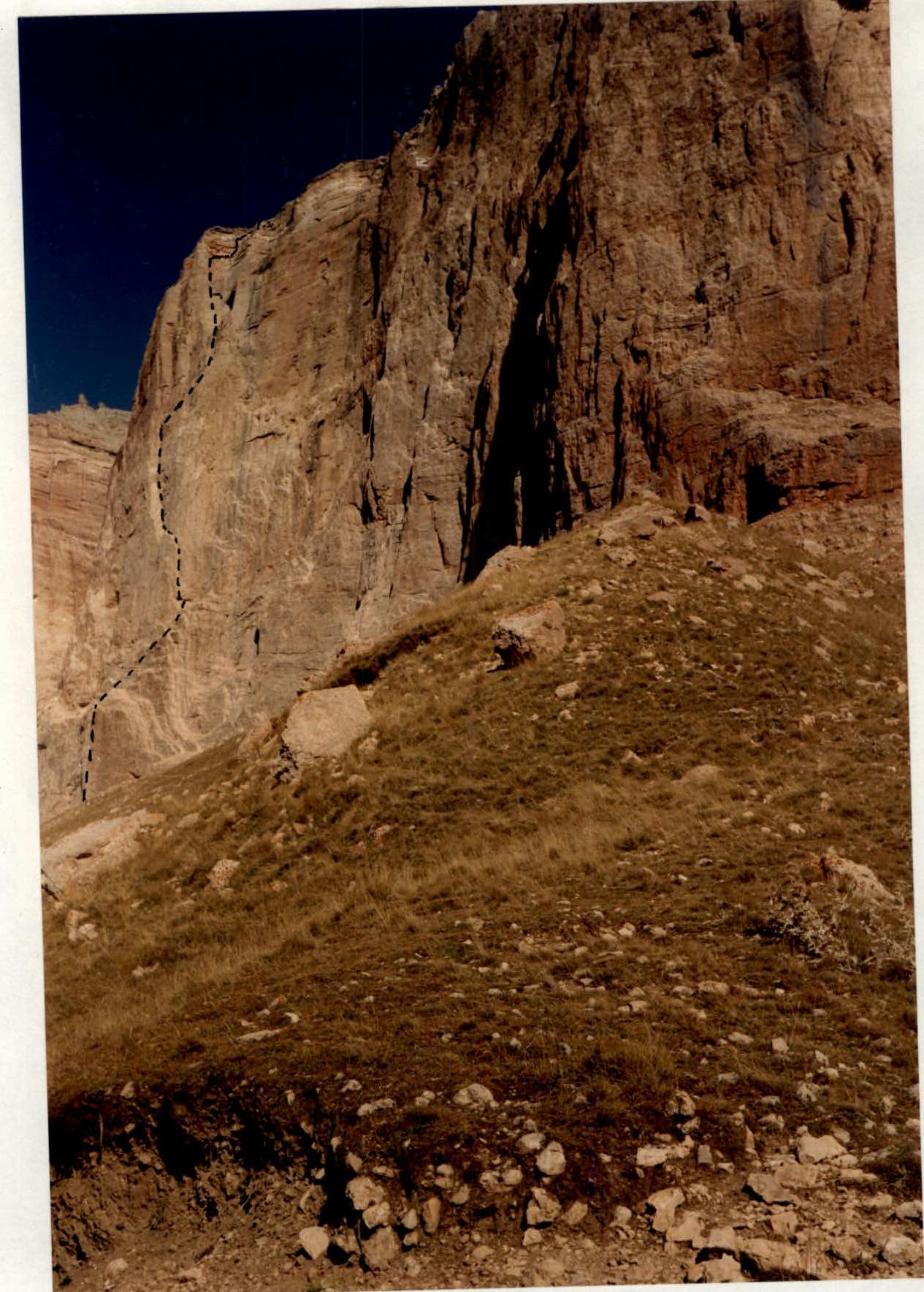
Photo #2. Route profile. Smena 8 m
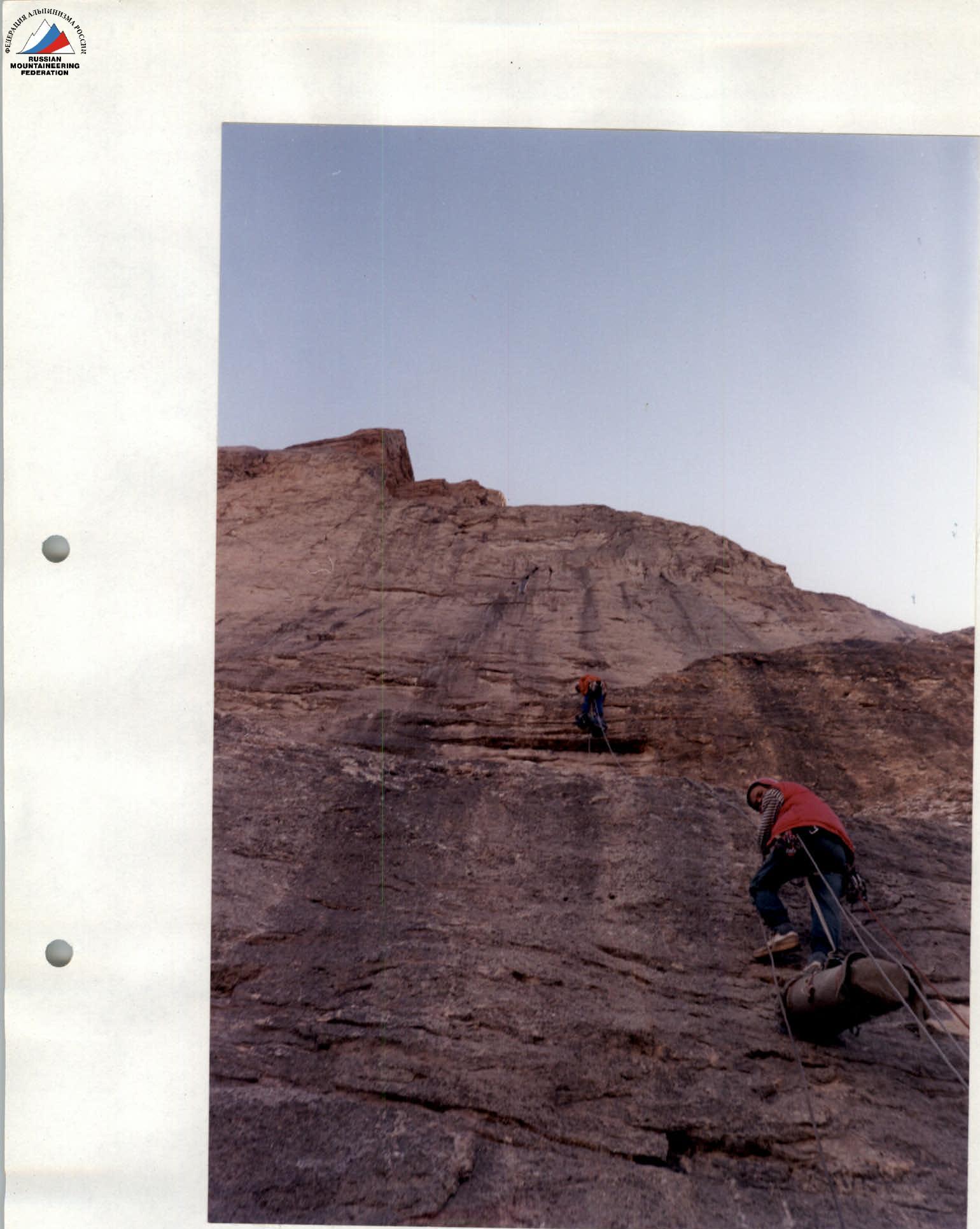
Photo #10. Section R9–R10. After straightening the fixed ropes. October 5, 1999, 11:00. Smena 8 m
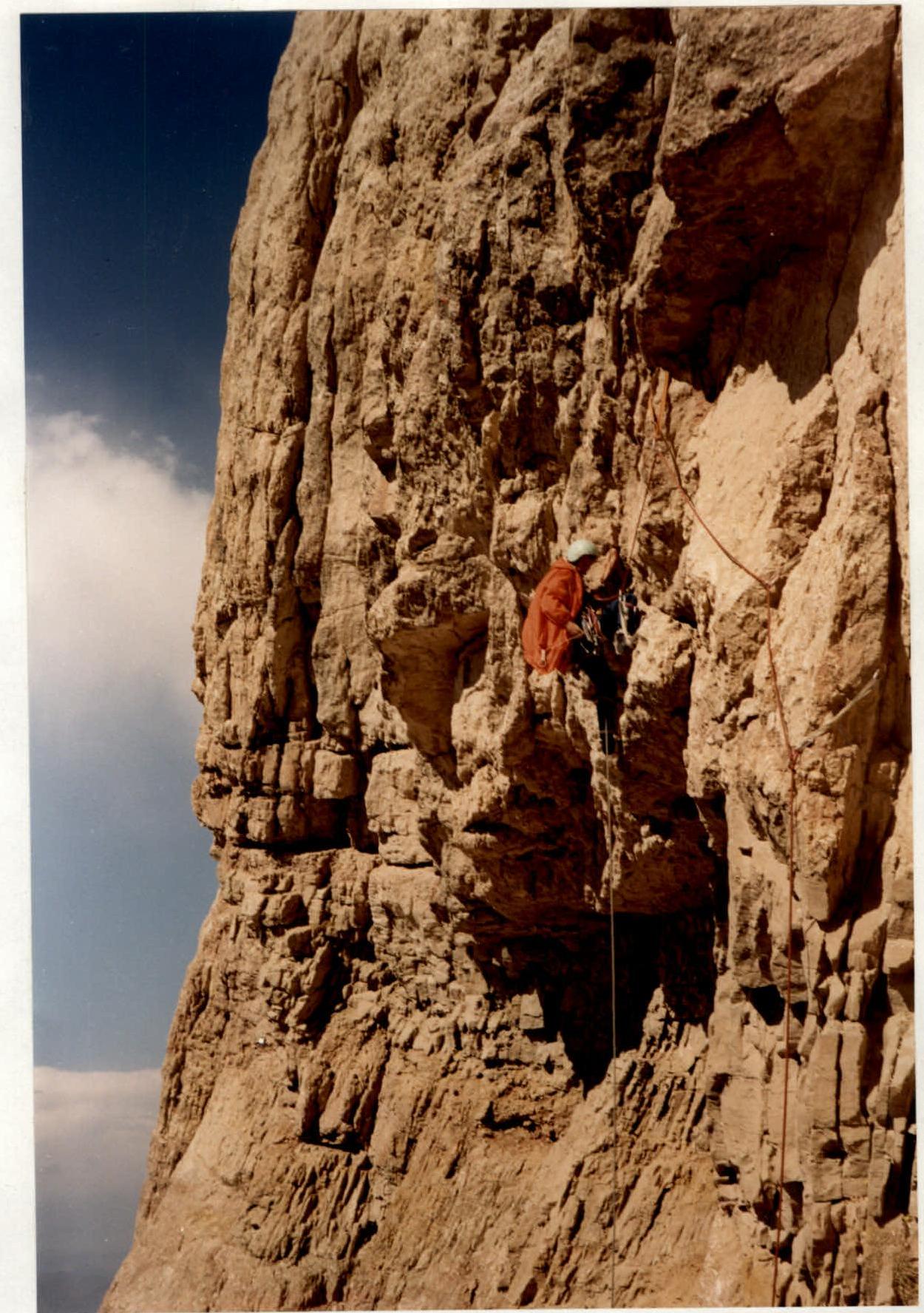
Photo #11. Section R11–R12. October 5, 1999, 13:00. Smena 8 m
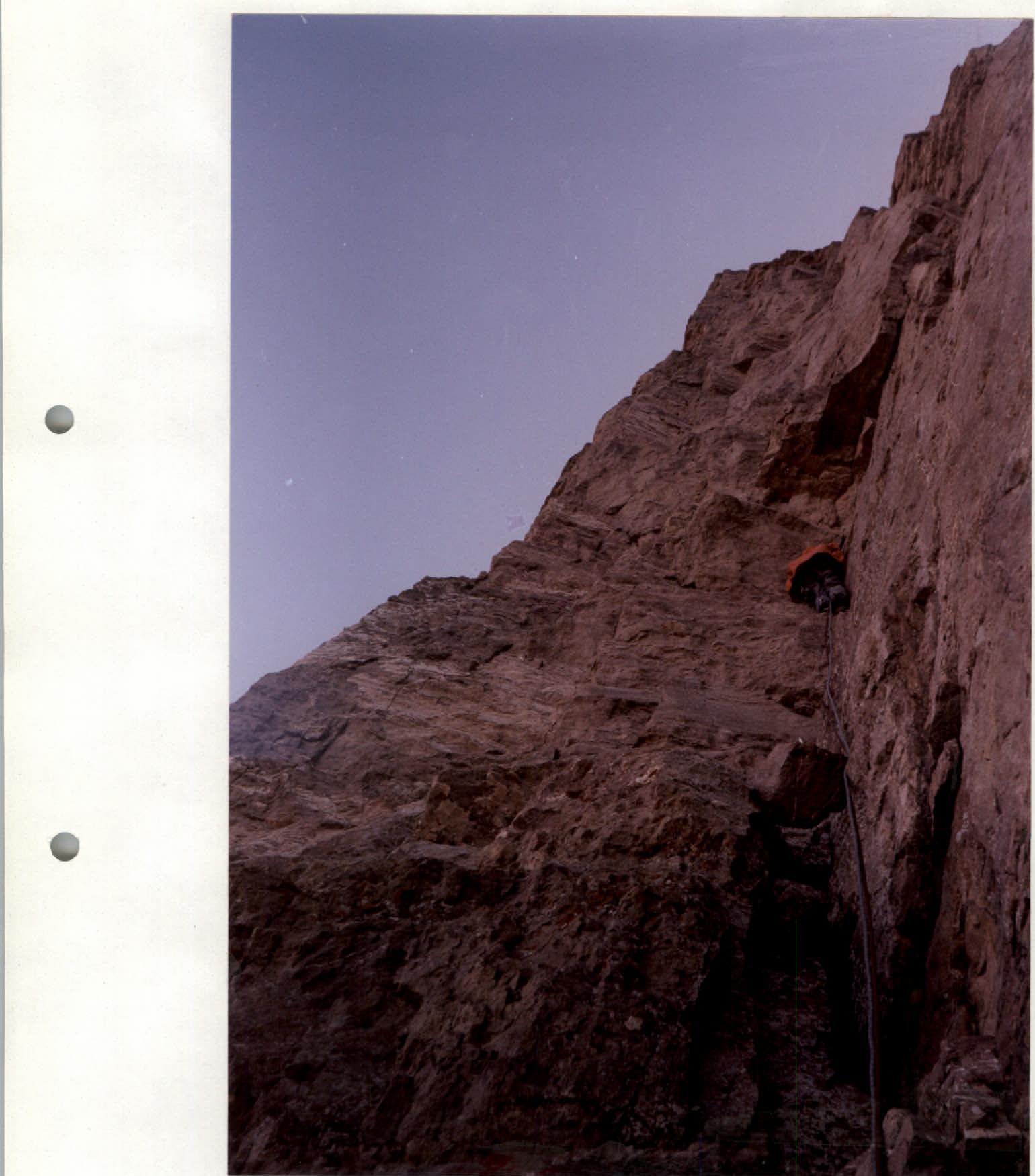
Photo #13. Section R18–R19. October 7, 1999, 9:00. Smena 8 m

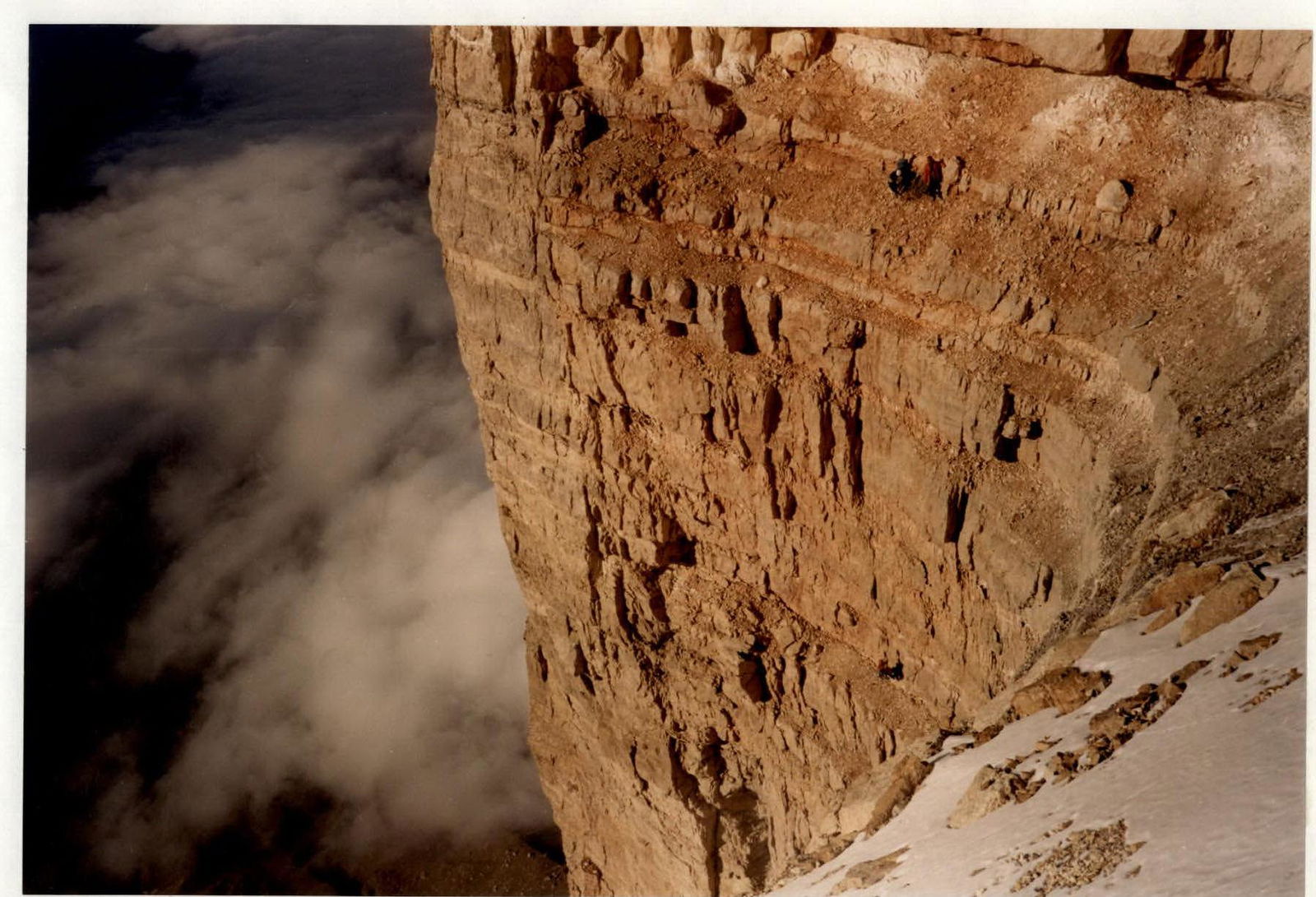
Photo #14. Section R26–R27. October 8, 1999, 16:00. Smena 8 m

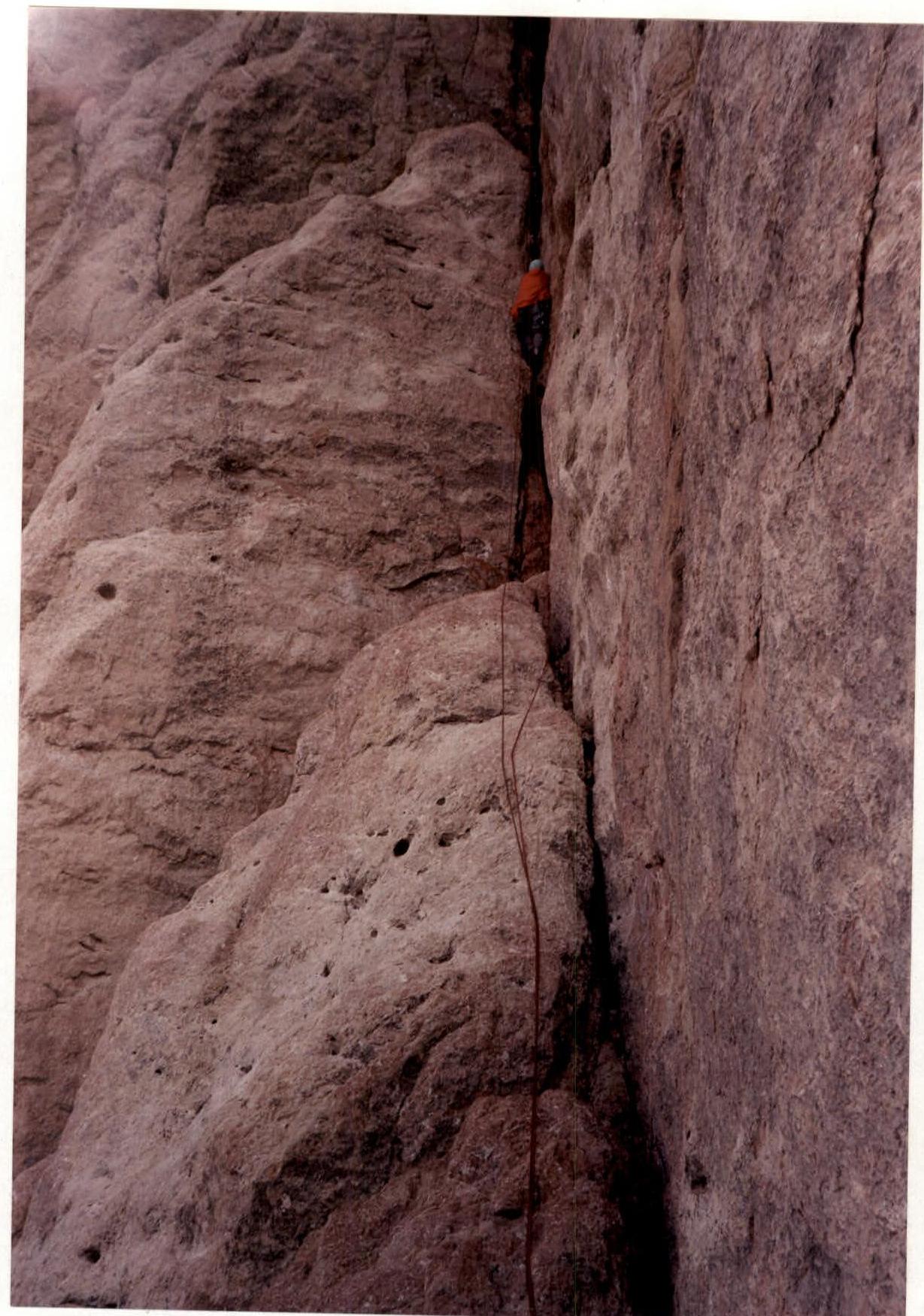
Photo #12. Section R15–R16. October 6, 1999, 12:00. Smena 8 m